
Temperature Mapping for Pharma & Biotech
GDP/GMP‑aligned studies with reporting that leads to a defendable monitoring layout. Planned, executed and interpreted by independent CQV specialists.

Why Mapping Matters
Temperature mapping verifies that controlled environments remain within defined ranges under representative operating conditions.
It is expected before first use, after significant changes (layout, HVAC, racking, setpoint), periodically on a risk basis (including seasonal mapping where appropriate) and after significant excursions or maintenance.
What we do
We validate temperature uniformity and control across rooms, warehouses and thermal equipment under realistic operating conditions (including door-opening, compressor change over and power-recovery challenges). We provide a clear study plan, calibrated instrumentation, execution, analysis and a monitoring placement plan.
Where we help
Warehouses & Distribution
Stability Rooms & Chambers
Depyrogenation Tunnels & Autoclaves


CRT/ambient-controlled areas, aisles/racking, docks and airlocks; seasonal mapping where risk justifies it.
Long-term/intermediate/accelerated temperature conditions with door/defrost challenges; shelf-by-shelf coverage.
Zone profiling, dwell-time verification (tunnels), cycle-based thermal mapping (autoclaves).
Temperature Boundaries Quick Reference
These are the temperature ranges Scitech-EKIUM covers.
| Category Application | Typical mapping setpoint / range (C) | Notes |
| Controlled Room Temperature (CRT) | 20-25 C (excursions 15-30 C; MKT <=25 C) | Align to label; excursions per USP. |
| Ambient (uncontrolled) | Typically 15-30 C (varies with climate) | Use only if label permits ‘Do not store above 25/30 C’. |
| Cool | 8-15 C | Label-dependent. |
| Refrigerated / Cold room | 2-8 C | Common for biologics/vaccines. |
| Freezer | -25 to -10 C (commonly -25 to -15 C) | Per pharmacopeial ‘freezer’ definition. |
| Ultra-low freezer | -90 to -60 C (typical setpoint -80 C) | Align to equipment specs. |
| Stability long-term | 25 C +/-2 C OR 30 C +/-2 C | ICH Q1A(R2) |
| Stability accelerated | 40 C +/-2 C | ICH Q1A(R2) |
| Stability intermediate | 30 C +/-2 C | ICH Q1A(R2) |
Sectors we work in
- Life Sciences & Biopharma (production, QA, distribution)
- Laboratories & Public Health (central labs, vaccine stores)
- R&D Environments (pilot plants, development labs)
- Hospitals & Healthcare (sterile services)

Why Scitech-EKIUM
- Independent CQV specialists – vendor-neutral, focused on audit-ready documentation and outcomes.
- Risk-based, realistic studies – baseline plus door-opening and power-recovery tests where feasible; representative loads where relevant.
- Defendable monitoring placement – we translate results into a sensor layout with written rationale.
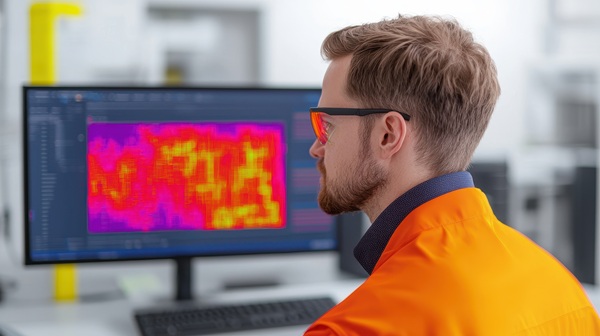
- Clear deliverables & timelines – protocols, calibrated instrument list, plots/heat maps and a final report ready for QA/QP review.
- UK-wide/EU support – experienced team for multi-site programmes.
What you get
- Study plan & protocol with acceptance criteria and challenges
- Probe/sensor layout (risk-based grid; vertical levels where needed)
- Calibrated instrumentation list and certificates
- Execution records (loads, door events, alarms)
- Data with time-out-of-tolerance summaries
- Monitoring placement plan
- Final report
How our temperature mapping works
Step 1 – PLAN
We review drawings/HVAC, usage and risks; define probe density and vertical levels; confirm acceptance criteria and challenges (door/power; load where relevant)
Step 2 – EXECUTE
We install calibrated sensors, run baseline and challenge phases aligned to your SOPs and operational windows
Step 3 – ANALYSE
We summarise uniformity, hot/cold spots, excursions and recovery times; identify worst-case locations.
Step 4 – RECOMMEND
We provide practical remediation (if needed) and issue a final report your QA/QP can approve
Where to use temperature mapping
- Before first use of new or modified areas/equipment
- After significant changes (layout, HVAC, setpoint, racking)
- On a risk basis (e.g., seasonal mapping for large CRT warehouses)
- Following notable excursions or recurring alarms