
News
Building the Future of Neutron Science: Progress at the HRPD-X Facility, Rutherford Appleton Laboratory
Work on the new HRPD-X building at the ISIS Neutron and Muon Source, Rutherford Appleton Laboratory is progressing well. Here’s a look at what has gone into the build so far – some of it less obvious than you might expect.
We were appointed by the Science and Technology Facilities Council (STFC) as lead engineering contractor for the new HRPD-X facility (R62/R132) during the summer last year. This followed our successful delivery of the scheme and detailed design phases.
But what exactly is HRPD-X?
HRPD-X is one of the world’s most advanced high-resolution neutron powder diffractometers. The facility is due to be completed late summer 2026. When operational, it will give researchers across the UK and internationally new capabilities to study how atoms are arranged in materials, with applications in everything from batteries and electronics to pharmaceutical development.
HRPD-X is a complete replacement, not just an upgrade. The new instrument will deliver approximately four times more detector coverage, incorporate new detector technology, and – for the first time – enable measurements to be taken in an applied magnetic field.
Given the technical requirements the facility must meet to house the instrument, construction has been anything but straightforward.
Steel frame in place: taking shape on site
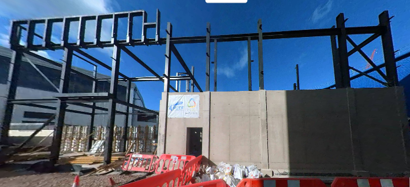
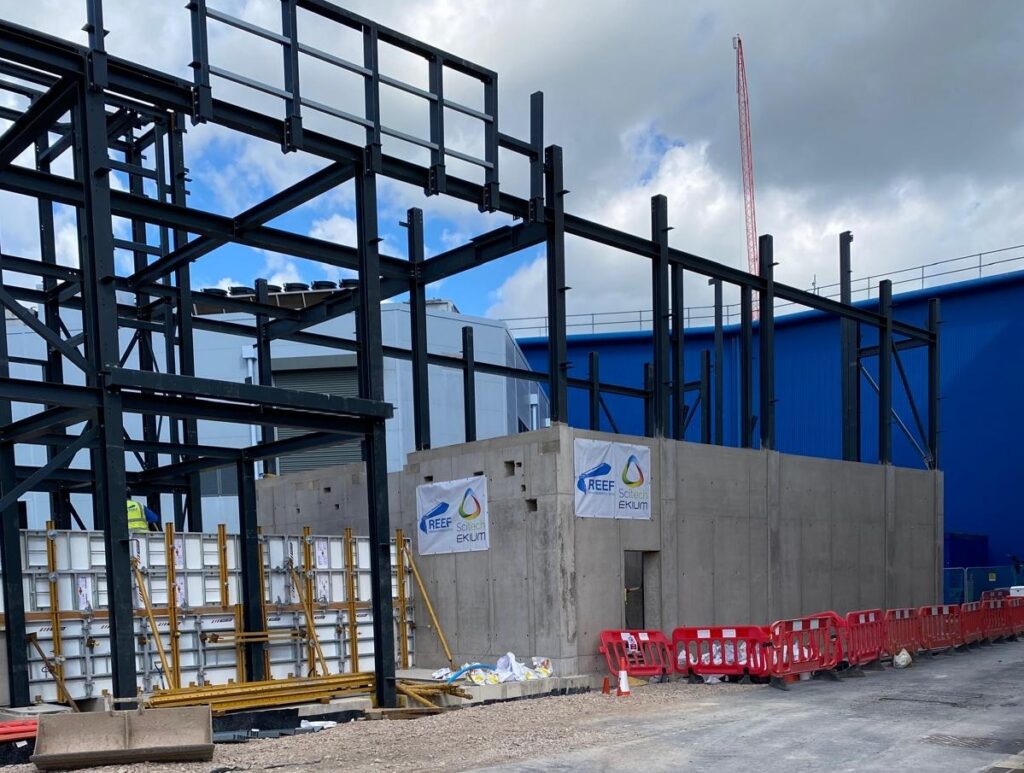
The latest milestone on site is the erection of the steel frame, which is now in place and giving the HRPD-X facility its distinctive form for the first time.
The frame sits directly on the reinforced concrete substructure and alongside the radiation shield walls, integrating with both to form the building envelope. It will support the cladding, roof and internal floor structure, along with the services that will run through the facility once operational.
With the steel up, the building is now clearly decipherable on site.
Getting to this point: foundations first
Before the frame could go up, the foundations had to be right.
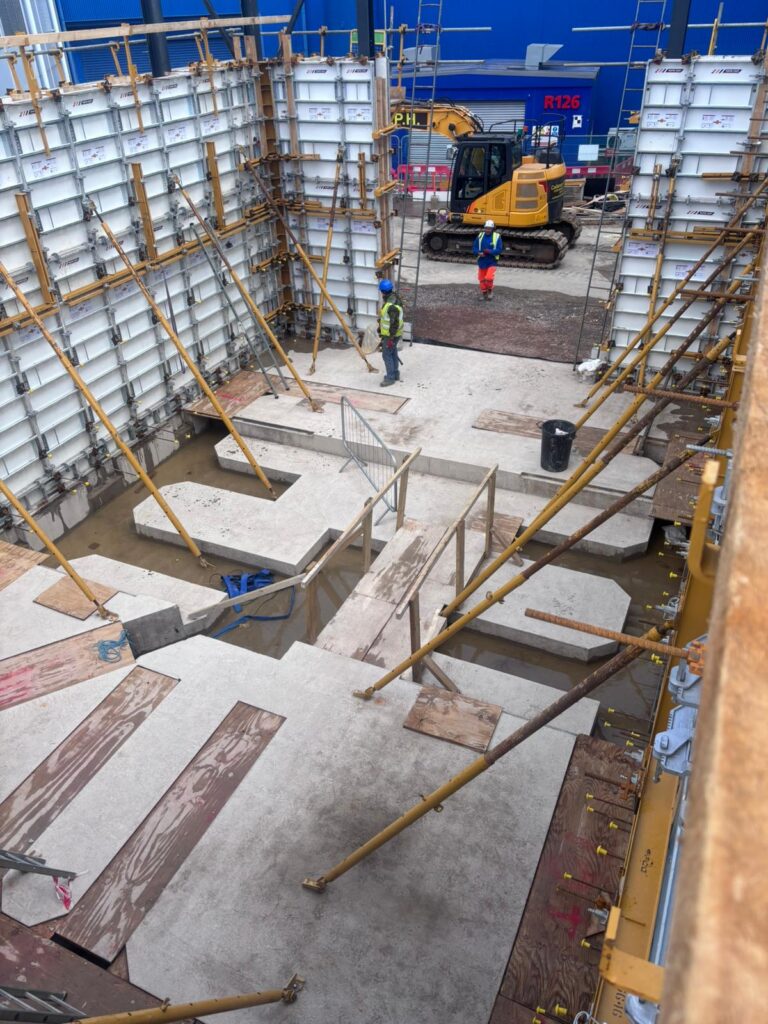
A reinforced concrete slab with integrated service trenches was installed to carry the pipework, cabling and infrastructure the diffractometer requires.
The slab contained complex reinforcement, with rebar tied within sections reaching up to 1.2m deep to suit the profile of the HRPD instrument. The entire substructure was built to within a 5mm tolerance in both line and level – critical, because the radiation shield walls were later constructed directly on and around it, leaving no room for error.
Invisible once the building is complete, but a foundation that everything above depends on.
Pouring the walls: a UK first in formwork technology
With the slab and trench network in place, the focus moved to the radiation shield walls – the most technically striking element of the build so far.
Designed to provide radiation shielding for neutron science, they are 400mm thick and 4.1 metres high, constructed in a single monolithic pour. Achieving that required the right formwork system and technique.
Reef Groundworks & Civils, the specialist subcontractor responsible for this phase of the works, selected the EFCO UK Rapid Cast formwork system – the first use of this system anywhere in the UK – providing a safe, efficient solution for casting the walls to specification.
What comes next: the F Tunnel sections
With the shield walls complete and the steel frame in place, work is progressing on the F Tunnel sections – a further technically demanding element of the build! Forming part of the instrument’s beamline path, they are subject to the same exacting precision standards as everything else on this project.
Looking ahead
HRPD-X instrument installation is scheduled to begin in late summer 2026. We will be sharing further project updates as construction progresses.
To follow the project from the ISIS side, the HRPD-X team at ISIS Neutron and Muon Source have their own project pages at isis.stfc.ac.uk.
| Project credits Client: Science and Technology Facilities Council (STFC) / ISIS Neutron and Muon Source Funding: UK Research and Innovation (UKRI) – ISIS Endeavour Programme Principal contractor: Scitech-EKIUM Project managers: EEDN Specialist subcontractor (shield walls and formwork): Reef Groundworks & Civils. Thanks to Alex Reeve, Director and Rob Burke, Operations Manager, Reef Groundworks & Civils, for their contribution to this article. |
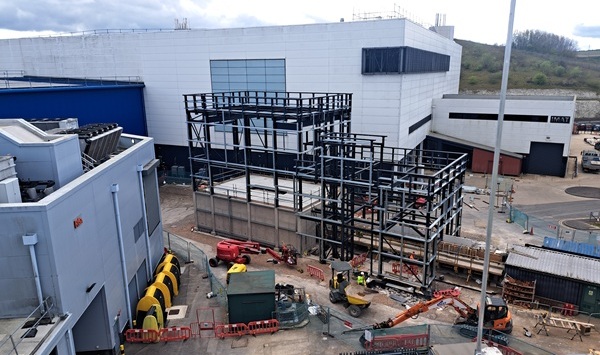
The HRPD-X steel frame now in place at R132, Rutherford Appleton Laboratory – April 2026.